Stop 13 of 19 · New Row and Dean Street
Cross Poddle
Where six streets met at the old crossing of the river.
New Row on the Poddle
New Row, once “New Row on the Poddle”, runs between Blackpitts and the Coombe. The river passes behind its buildings and those of New Street. Its newspaper history is lively. On 12 September 1730 two sharpers who had just robbed a man fell out over the purse in New Row; one was killed and the other badly beaten, and the victim never saw his money again. In November 1787 the Poddle flooded houses from New Row to Meath Street, driving people into their upper rooms. The storm of 12 June 1822 brought down chimneys in New Row and Malpas Street, and on the Night of the Big Wind in 1839 a falling chimney killed a mother and child in New Row.
In the days of the Penal Laws, Catholic lay teachers such as Catherine Anderson and Catherine Hanley kept illegal schools in New Row.
Cross Poddle
Dean Street, where Patrick Street, New Street and Kevin Street meet, was called Cross Poddle until May 1826, when the Wide Streets Commissioners renamed it. Rocque’s map of 1756 simply marks it “Poddle”, as do the Pool and Cash map of the 1780s and maps of 1787 and 1797; the first map found with “Cross Poddle” is an 1818 plan of the precincts of St Patrick’s Cathedral. The “Cross” may refer to church lands or to the crossing of the stream itself.
It was a bottleneck less than 25 feet wide where six streets met. In 1814 a resident wrote to the Paving Board that snow had blocked it so badly that carriages could neither pass nor turn, and suggested that if every householder, the dairymen included, took away one cartful, the street would be clear in two hours. Where New Street, Patrick Street and Dean Street meet was once Freestone Alley, later Freeman’s Stone; a stone here is recorded in 1603 as marking the boundary between the city and the archbishop’s liberty.
Punishment was public. In 1766 Dennis Sullivan was whipped from Cross Poddle to Harold’s Cross for stealing meal, with a bag of meal tied round his neck, on the order of Mr Justice Drury.
Source: Faulkner’s Dublin Journal, 1766; Rocque (1756); 19th-century plan of St Patrick’s precincts.
The Poddle Hole
The Poddle Hole was the name for the covered channels of the river near St Patrick’s Cathedral, and things turned up in it. On a Sunday evening in September 1770, “to the amazement of many people”, several hundred live herrings were taken out of the Poddle Hole water under the house at the Sign of the Royal Oak at Nicholas’ Gate. In October 1789 drinkers in a tavern in Essex Street heard roaring under their kitchen and found a young bull trapped beneath the flags over the Poddle channel. It was rescued; nobody claimed it, and it was thought to have been swept in at the Poddle Hole.
To give someone a “Poddle Hole step” was to plunge your foot into the gutter and splash them. When rioters from Cavan were carted through the Liberty to be punished in November 1735, one of them gave the hangman a Poddle Hole step, which earned him a harder beating.
Source: Dublin Chronicle, 13 September 1770 and 1 October 1789; Dublin Evening Post, 15 November 1735.
St Sepulchre’s Palace
Kevin Street Garda Station stands on the site of the archbishops’ palace of St Sepulchre, built in the late 12th century by John Comyn, the first Norman archbishop of Dublin. Its name recalls the Crusades and the Holy Sepulchre in Jerusalem. It stood near the Slighe Chualann, the old road south, and the archbishops’ lands stretched from Harold’s Cross to Donnybrook and Crumlin; by the 14th century there were mills on the Poddle and houses all around. The palace was damaged in the Bruce invasion of 1315. It is often said the river was part of its defences, though no map has been found to show it; the archbishop’s grounds did once reach as far as Cross Poddle. In 1806 it was handed to the government and became a police barracks, later the headquarters of the Dublin Metropolitan Police. A 16th-century window and parts of the vaulted kitchens survive.
In 1751 William Jackson, a butcher from Kevin Street, was shot climbing the palace garden wall after a run of thefts. Days later his family and a crowd stormed the house to find the man who fired, and it took the Poddle Guard, called out by Justice Drury, to stop them.
Bishop Street
Bishop Street dates from about 1610. It was Butter Lane, then Boater Lane by 1756, and took its present name in 1774, probably from the archbishop who owned it. Old maps show a watch house at its Kevin Street end, near St Patrick’s Well and the river. It is often said the Poddle ran under Jacob’s biscuit factory here, and a newspaper once told of two workers who fished in it on quiet shifts, but no map evidence has been found that the river ever flowed under the factory.
Pictures from the archive
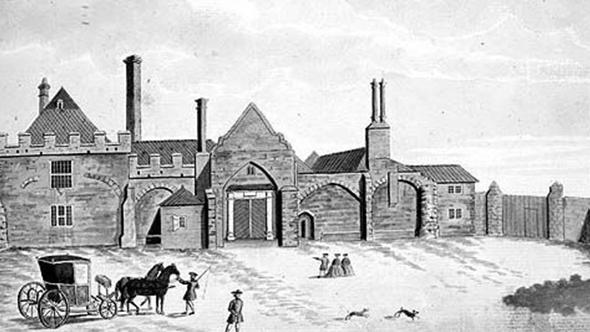
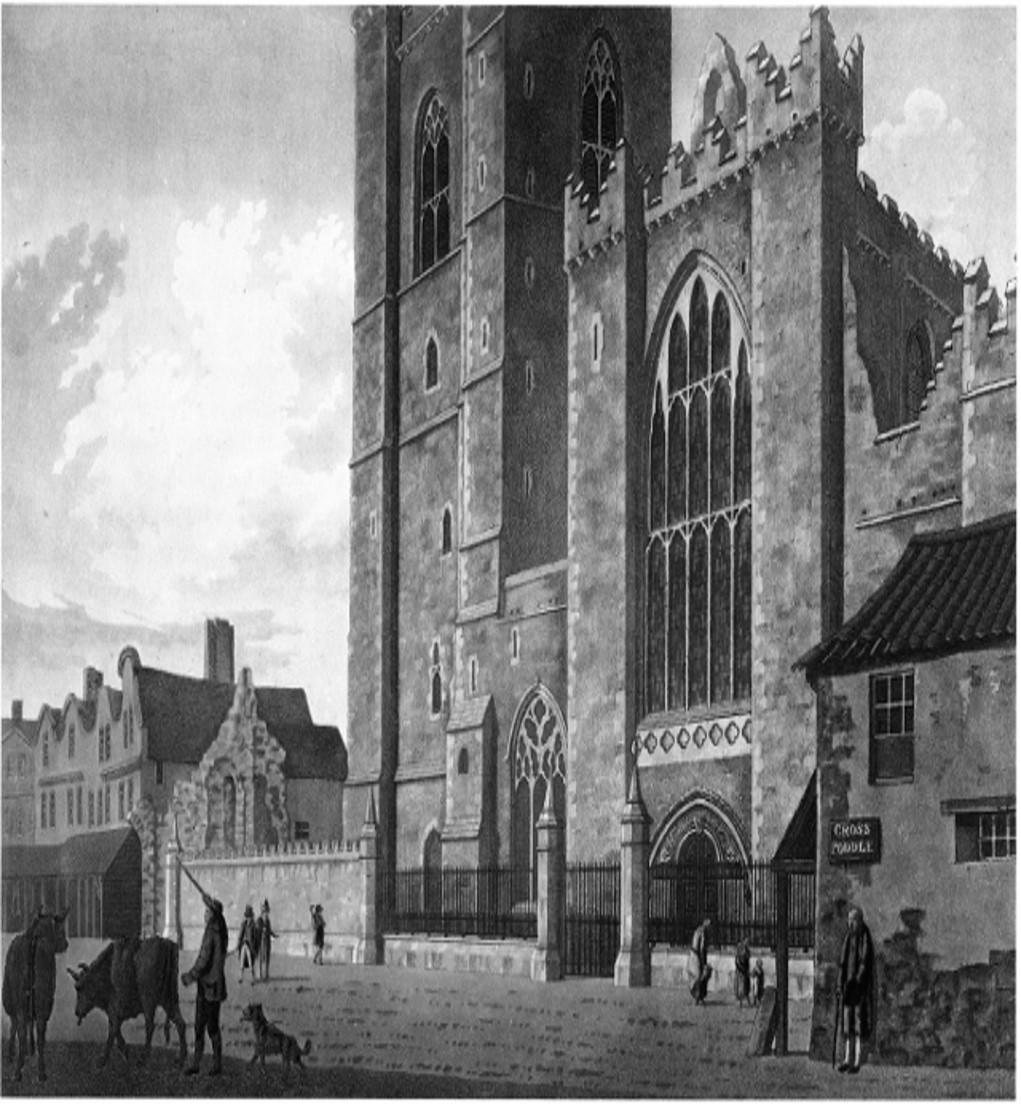
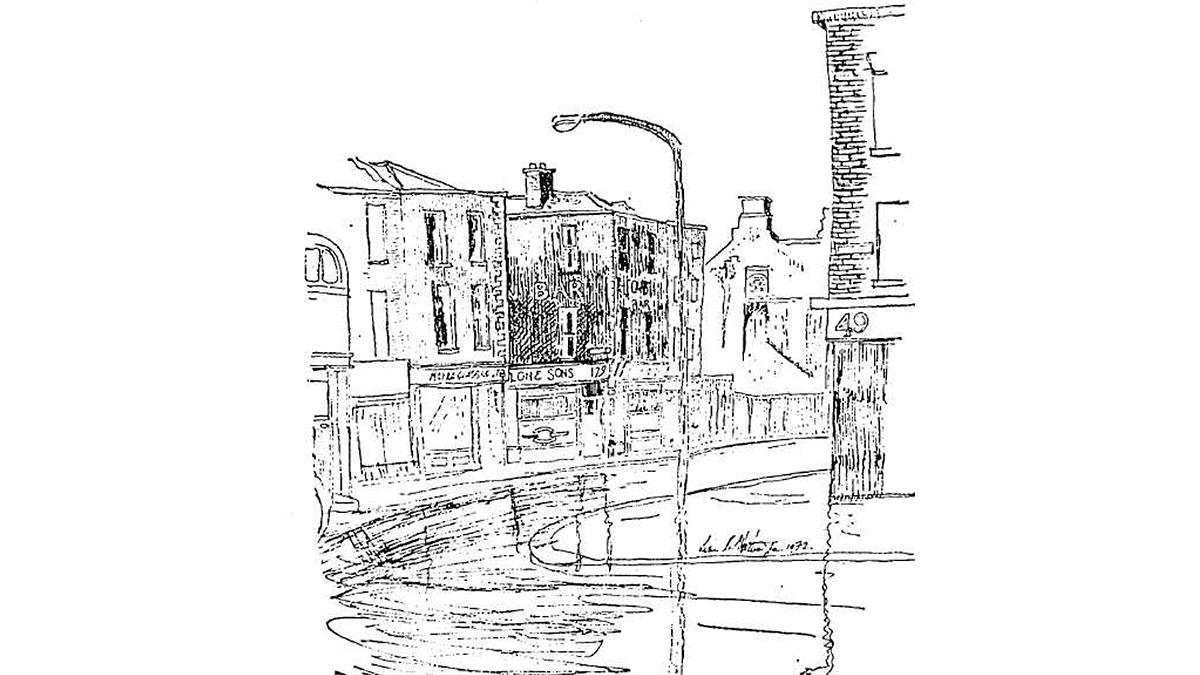
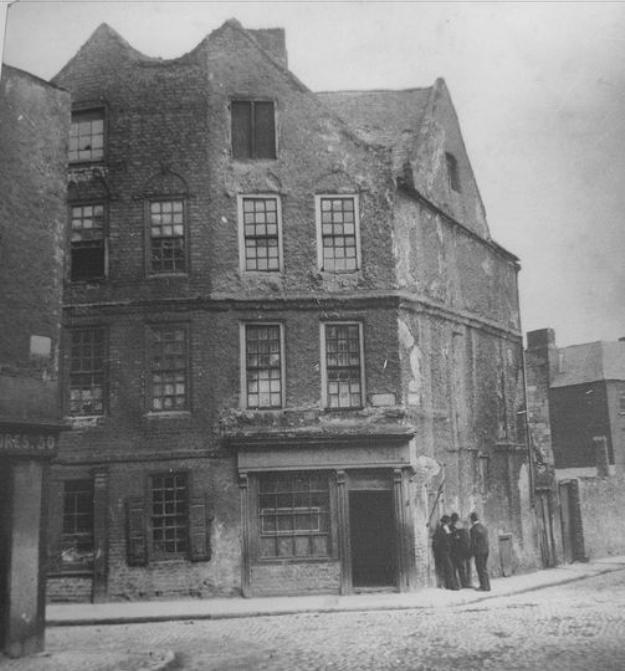
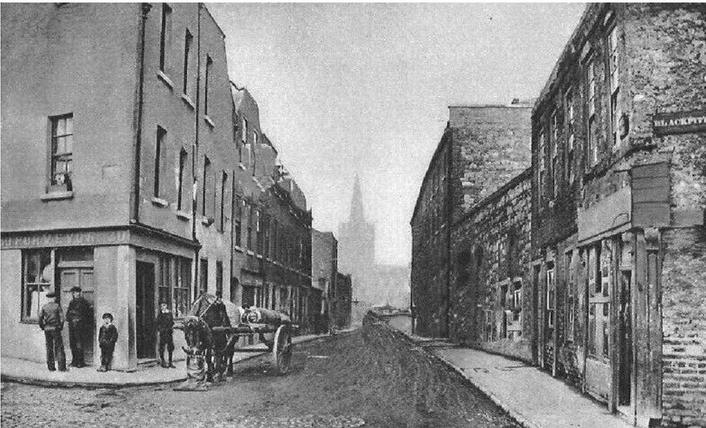
Pictures gathered by the Crumlin and Walkinstown History Group for their Poddle research, shown here in black and white. If you know more about any of them, or hold the rights to one, please get in touch.
Poddle People
- Archbishops Comyn and de Loundres: Built on the river’s island
Meander off the walk
A detour from this stop, off the main line of the river.
- The Liberties: The old manors outside the walls, their weavers and the Poddle Guard.
Parts of this page draw on research by the volunteers of the Crumlin and Walkinstown History Group, shared with poddle.ie. About their research.